The Retirement System Is Evolving. Retirement Planning Should Too.
America is rethinking retirement. As longer lives reshape the way we work, save, and age, the conversation is expanding beyond financial security alone. At Rejara, we believe the next generation of retirement planning should prepare us better.
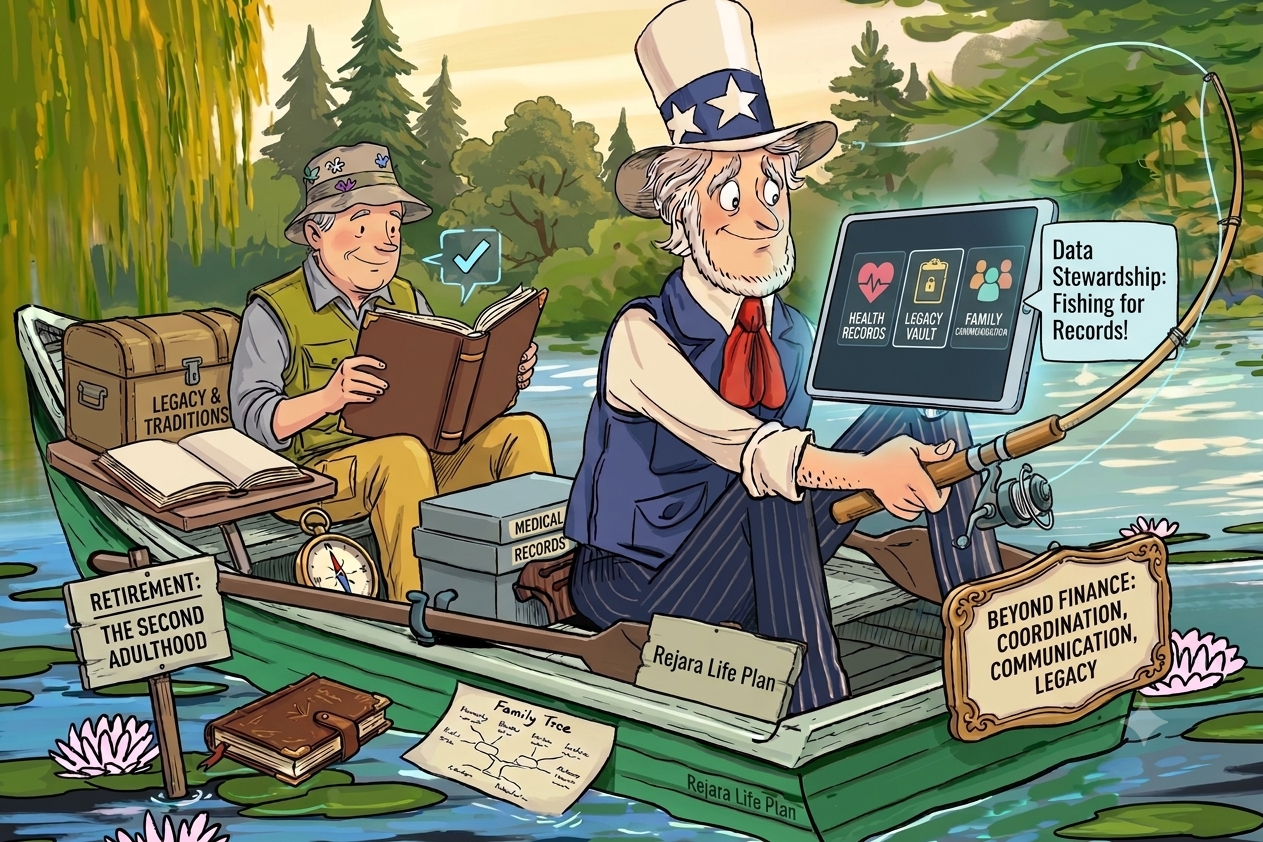
Retirement is once again at the center of a national conversation. Policymakers are debating how to strengthen Social Security, expand access to workplace retirement plans, and modernize a system that was largely designed for a very different America. These discussions are both necessary and timely. Americans are living longer, traditional pensions have become increasingly rare, and individuals bear more responsibility than ever for financing their later years.
The retirement system is adapting because the world has changed.
At Rejara, we believe that presents a broader opportunity, one that extends beyond retirement policy and into the way we think about retirement itself.
For generations, retirement planning has focused primarily on a single objective: financial independence. That focus has served us well. Millions of families have benefited from disciplined saving, thoughtful investing, and careful planning. Yet as retirement continues to evolve, it becomes increasingly clear that financial preparation, while essential, is no longer sufficient on its own.
Perhaps the next chapter of retirement planning is not about replacing what already exists. Perhaps it is about completing it.
Has the Definition of Retirement Changed?
It is worth reflecting on how dramatically retirement has changed in 50 years..
Half a century ago, retirement often represented a relatively brief and predictable stage of life. Many people spent most of their careers with a single employer, retired with a pension, collected Social Security, and expected retirement to last little more than a decade. Planning reflected that reality.
Today's retirement bears little resemblance to that model.
Many Americans will spend twenty-five or even thirty years in retirement. Those years are rarely defined by leisure alone. They may include relocating to a new community, welcoming grandchildren, caring for an aging spouse, volunteering, traveling, pursuing new interests, managing chronic health conditions, or adapting to technologies that did not exist during their working years.
In many respects, retirement has become less like an ending and more like a second adulthood, a chapter with its own opportunities, uncertainties, and responsibilities.
If retirement itself has changed so profoundly, it seems reasonable to ask whether our approach to retirement planning should evolve as well.
What Hasn't Changed Along With Retirement?
Modern financial planning has become remarkably sophisticated.
Advisors can model decades of investment returns, account for inflation, optimize tax strategies, evaluate withdrawal rates, and estimate the probability that a portfolio will support a client throughout retirement. These advances have transformed the way families prepare financially for the future.
Yet for all of that sophistication, there remains a striking imbalance.
Open almost any retirement plan and you will find a detailed roadmap for financial security. What you are less likely to find is a roadmap for many of the practical realities that eventually shape retirement itself.
How will important medical information be organized if it is suddenly needed?
How will family members know where essential legal documents are kept?
What conversations should take place while decisions can still be made thoughtfully rather than under pressure?
How can decades of family history, personal values, and life lessons be preserved before they are quietly lost?
These questions are not financial in nature, yet they often become the questions families remember most.
Anyone who has helped a parent through illness or supported a spouse during a medical crisis understands that the greatest challenges are rarely limited to investment performance. More often they involve coordination, communication, and the simple difficulty of finding the right information at precisely the moment it is needed.
Financial security provides stability. Preparation provides confidence.
The two are complementary, not competing, goals.
What Would Retirement Planning Look Like If We Designed It Today?
Imagine, for a moment, that retirement planning did not already exist and we were asked to design it for the first time.
Certainly, we would include savings, investing, insurance, and tax planning. Those are indispensable foundations of long-term financial security.
But would we stop there?
Or would we also encourage families to organize important information before a crisis occurs? Would we make space for conversations about future healthcare preferences, housing decisions, caregiving responsibilities, and the practical realities of aging? Would we help people preserve the stories, traditions, photographs, recipes, and personal histories that often become a family's most treasured inheritance?
In other words, would we design a retirement plan—or would we design a life plan?
At Rejara, we believe the distinction matters.
The purpose of retirement planning has never been simply to accumulate enough assets to leave the workforce. Its deeper purpose is to help people live the years that follow with greater confidence, greater independence, and greater peace of mind.
Seen through that lens, organizing important documents is not merely an administrative task. It is an act of consideration for those who may one day need them. Recording family stories is not simply nostalgia. It is a way of preserving identity across generations. Discussing future wishes is not dwelling on uncertainty. It is reducing uncertainty for the people we love.
These are not separate from retirement planning.
They are part of what retirement planning is becoming.
Where Do We Go From Here?
The conversation about modernizing America's retirement system will continue, and it should. Financial security will remain the cornerstone of a successful retirement, and strengthening the institutions that support it is an important national priority.
At the same time, families have an opportunity to broaden the conversation within their own homes.
Preparing for retirement has always meant preparing for the future. The future, however, asks different things of us than it did a generation ago. Longer lives bring extraordinary opportunities, but they also require greater intentionality, not only in how we save, but in how we organize our lives, communicate with our families, and prepare for inevitable change.
At Rejara, we believe the next generation of retirement planning will reflect that broader perspective. It will continue to value financial discipline while recognizing that a fulfilling retirement is shaped by far more than financial outcomes alone.
The retirement system is evolving to meet the realities of the twenty-first century.
Retirement planning should evolve with it.
Because the true measure of a successful retirement is not simply whether we accumulated enough to stop working. It is whether we prepared ourselves and the people we love, to embrace one of life's longest and most meaningful chapters with clarity, confidence, and purpose.