The Simple Act of Showing Up: How Different Cultures Keep People Connected
What it means to “be cared for” looks very different depending on where you are.
The way care is organized shapes whether people remain connected to everyday life as they enter their next chapter. It’s not about which country does it best, but how each creates systems where someone would notice if something changed.
In the United States, everyday life is moving in a different direction. Many of the systems we rely on have become more transactional over time: the same store, but a different cashier, or the same route, but a different driver.
Those systems are efficient, but they do not create familiarity. Over time, they remove the connective layer that once made it easier for people to stay known to one another.
More Americans are aging alone. Census data show that more than one in four adults over 65 now live by themselves, a number that increases significantly in later life.
Looking across aging systems and the realities families face when it’s time for more help, the most durable responses to loneliness share a common characteristic: small, repeatable moments where people remain visible to one another.
Japan: Routine Contact as Community Care
Japan has a term, kodokushi, often translated as “lonely death,” which refers to “the tragic cases of people dying alone at home with no one noticing for months, and sometimes years.”
Japan is facing one of the fastest demographic shifts in the world. Nearly 30 percent of the country’s population is now over the age of 65, and the number of older adults living alone continues to rise.
Against this backdrop, thousands of delivery workers known as Yakult Ladies travel neighborhood routes delivering small probiotic drinks to households.
What began decades ago as a product distribution strategy has gradually become something more meaningful. There are now more than 31,000 Yakult Ladies working across Japan, visiting homes throughout the week as part of their delivery routes.
Because the same delivery worker returns regularly, the visits create an informal form of community awareness. Changes in routine, mood, or health become noticeable over time. And when someone doesn’t answer the door, that absence can trigger concern or a check-in with family members.
The system was not originally designed to address loneliness or aging, but it created consistent contact. Over time, that consistency turned a routine delivery into something closer to neighborhood infrastructure.
For many older adults living alone, the delivery is less about the drink and more about the interaction with a familiar face: “In a country grappling with demographic change and rising isolation,” Giulia Crouch of the BBC writes, “that brief exchange at the doorstep can carry more weight than a small red bottle suggests.”
The Netherlands: Turning Everyday Touchpoints Into Social Support
The Netherlands approaches this differently.
After the body of an elderly woman was discovered in her Rotterdam home a decade after her death, and described by a local politician as “a poignant image of how great loneliness can be in such a big city,” Rotterdam began welfare visits for seniors, and that local effort later fed into the national One Against Loneliness initiative.
Rather than treating loneliness as only a private hardship, the Dutch response has tried to involve municipalities, businesses, and community organizations in addressing it.
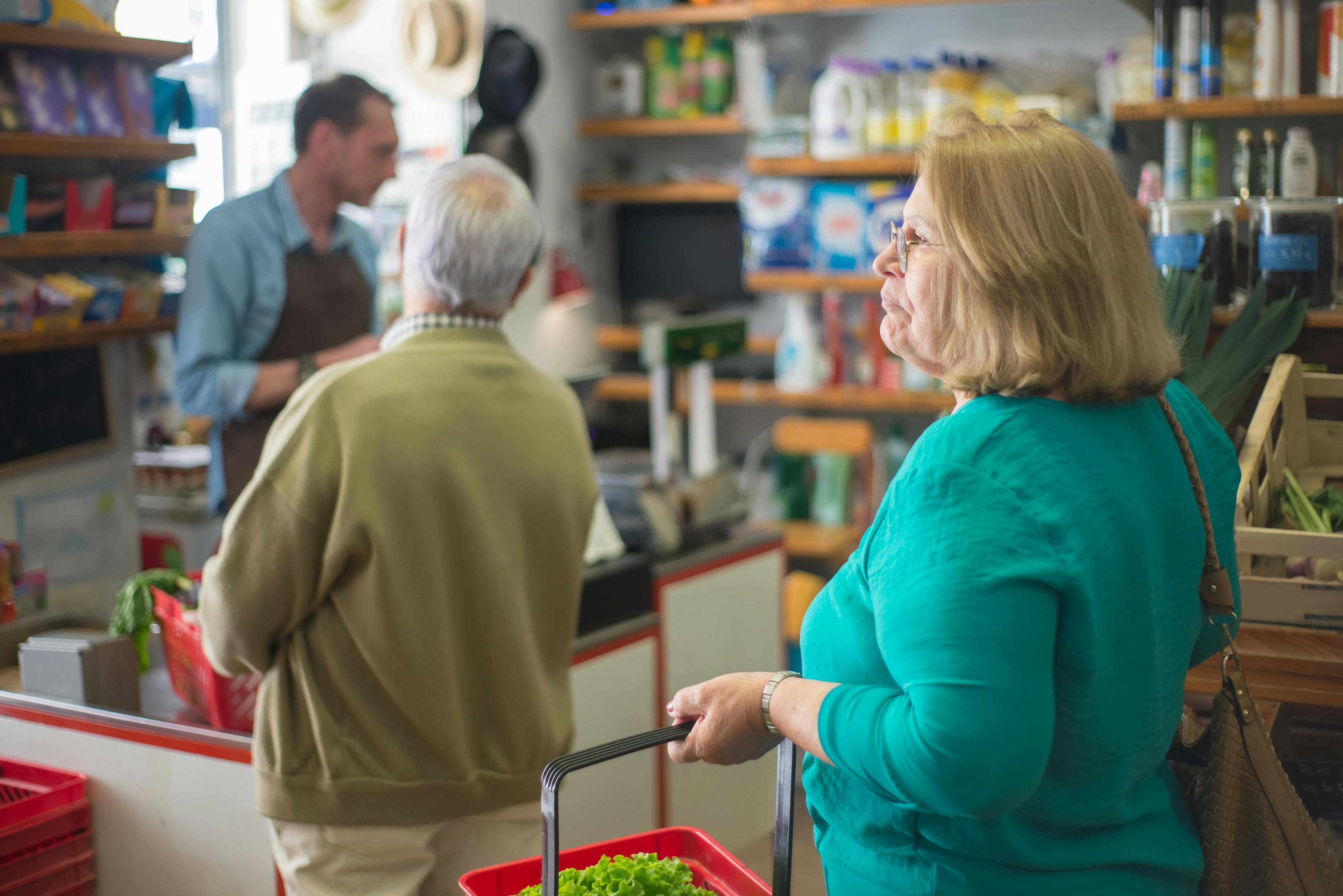
Jumbo, one of the largest supermarket chains in the Netherlands, introduced “chat checkouts,” or kletskassa, for customers who are not in a hurry and may welcome conversation while paying for their groceries. The first version was piloted in 2019, and the idea later expanded across stores in the Netherlands and Belgium.
A trip to the supermarket is part of the weekly routine, and kletskassa asks whether that routine can also support connection.
Along the same lines, the Dutch postal service has run a program in which postal workers can flag signs that a resident may be struggling. “You can consider our deliverers an extra pair of ears and eyes in the neighbourhood,” Thijs Kerckhoffs, director of social impact, told the BBC.
According to a 2022 EU-wide survey, the Netherlands was found to have one of the lowest levels of loneliness in Europe. “I feel needed and wanted,” a participant told the BBC’s Claire Bates. “I feel more normal. I'm part of the system again.”
The Role of Everyday Moments
The details differ, but the underlying lesson is similar: connection emerges from systems that create regular points of contact.
For older adults, remaining connected often depends less on large programs and more on consistent, predictable moments of contact: a weekly delivery, a conversation at the store, a neighbor.
These small signals reinforce that someone is still part of the community around them.
Where This Leaves Us
In a world where daily interactions are increasingly transactional, the responsibility of maintaining connection is shifting back to individuals and families.
The people who are part of your life today, even in small ways, are often the same people who will become part of your care network over time.
That perspective has shaped how we think about the work we are doing at Rejara.
Technology cannot replace the familiarity of a neighbor, but it can help individuals and families organize the details and create an online community so that information, plans, and responsibilities are easier to manage and share, and no one slips out of view.
Rejara helps you build a care network earlier by making visible who is already part of your life and creating simple ways to stay connected, share information, and coordinate over time.
For societies that are growing older, that may be one of the most important forms of infrastructure we can build.
Sources
Crouch, Giulia. The yoghurt delivery women combatting loneliness in Japan. BBC Travel. https://www.bbc.com/travel/article/20260302-the-yoghurt-delivery-women-combatting-loneliness-in-japan
Bates, Claire. How a Dutch tragedy made people take loneliness seriously. BBC News. https://www.bbc.com/news/world-europe-67714026
Geiger, Gabriel. Grocery Store Opens ‘Chat Registers’ for Lonely Customers. VICE. https://www.vice.com/en/article/grocery-store-opens-chat-registers-for-lonely-customers/
U.S. Census Bureau. Older People Projected to Outnumber Children for First Time in U.S. History. https://www.census.gov/newsroom/press-releases/2018/cb18-41-population-projections.html
Administration for Community Living. Profile of Older Americans. https://acl.gov/aging-and-disability-in-america/data-and-research/profile-older-americans