10 Things Senior Living Operators Know About Aging That Most Families Don't
What do senior living professionals wish every family knew before a crisis? After caring for thousands of older adults, they've learned lessons that can help anyone age with more confidence and fewer regrets.

Most families don't think seriously about aging until life forces the conversation.
A fall. A hospitalization. A diagnosis. Suddenly, adult children are trying to answer questions they've never had to ask before. Is Mom still safe at home? Should Dad continue living alone? Is it time to consider senior living?
Senior living professionals experience a very different reality.
They help thousands of older adults navigate these transitions every year. They see what works, what doesn't, and—perhaps most importantly—what families wish they had done sooner. After years of watching people age, they begin to recognize patterns that aren't always obvious from the outside.
I recently listened to a conversation between Michael Hughes of LeadingAge and Chris Nall, Chief Technology Officer of Atria Senior Living, one of North America's largest senior living providers. Although the discussion centered on technology, the real takeaway was something much broader: a collection of practical lessons about what it takes to age well.
Here are ten insights that every family can benefit from.
1. Planning for aging begins long before you need senior living
One of the first things that stood out was how much communities want to know about residents before they arrive. Medical history is important, but so are favorite meals, hobbies, routines, careers, interests, and the relationships that define someone's life.
That philosophy extends well beyond senior living. The best time to organize important documents, discuss future wishes, and involve family members isn't after a crisis. It's while everyone is healthy enough to make thoughtful decisions. Planning early doesn't mean expecting the worst—it means giving yourself more choices when life inevitably changes.
2. Most people don't move because they're sick
Many families assume senior living begins after a major health event. In reality, the transition is often much more gradual.
Maintaining a home, preparing meals, driving everywhere, keeping up with repairs, and managing everyday responsibilities eventually become more work than they're worth. Health may still be good, but daily life has become harder than it needs to be.
The lesson isn't that everyone should move sooner. It's that waiting for a crisis often limits your options. The best decisions are usually made while people still have the time and energy to make them.
3. Independence doesn't end when you move
One misconception is that moving into senior living means giving up independence. The opposite is often true.
Independent living communities are designed to help residents remain independent for as long as possible. By removing the burdens of home ownership and providing the right level of support, many people find they have more freedom—not less—to enjoy life.
Successful aging isn't about avoiding change forever. It's about choosing the environment that helps you stay independent the longest.
4. Quality of life is built on surprisingly ordinary things
One of the most memorable moments in the discussion came when Chris Nall explained one of the biggest reasons residents choose to leave a community.
It wasn't healthcare.
It wasn't staffing.
It was food.
The answer is a reminder that quality of life is often shaped by small, everyday experiences. Good meals, familiar routines, enjoyable conversations, and welcoming spaces influence happiness just as much as medical care. Families evaluating care options sometimes focus so heavily on clinical services that they overlook the simple things that make each day enjoyable.
5. Loneliness deserves as much attention as illness
Successful aging isn't measured only by blood pressure or medication lists.
Communities place enormous value on helping residents stay engaged—through shared meals, activities, friendships, and meaningful routines. They understand that isolation often leads to declining physical and emotional health.
As we grow older, maintaining purpose and human connection may be just as important as managing chronic disease.
6. Small changes usually tell the biggest story
Professionals rarely wait for dramatic events before paying attention.
Instead, they notice subtle changes. Someone skips breakfast several mornings in a row. A normally social resident withdraws from activities. A person who always attended exercise classes suddenly stops showing up. These small shifts often reveal problems long before a medical emergency occurs.
Families can benefit from adopting the same mindset. The little things often matter more than the big ones.
7. The best care prevents problems instead of reacting to them
The discussion wasn't about responding faster when something goes wrong. It was about reducing the likelihood that it goes wrong in the first place.
Whether preventing falls, identifying health changes earlier, or recognizing behavioral patterns before they become crises, the philosophy remained the same: proactive care consistently produces better outcomes than reactive care.
It's an approach every family can embrace, regardless of where a loved one lives.
8. Families never stop being part of the care team
Moving into a senior living community doesn't replace family involvement.
In fact, the opposite is true. Communities want families to stay informed, visit often, participate in important decisions, and remain active in their loved one's life. The strongest outcomes come from collaboration, not delegation.
Professional caregivers bring expertise. Families bring history, relationships, and an understanding of the person behind the medical record.
9. Technology should create more human moments
Although technology was the focus of the conversation, Chris Nall returned repeatedly to one simple principle: technology should help caregivers spend more time with residents, not more time staring at screens. Automating documentation and reducing administrative work gives staff more opportunities to build relationships, notice changes, and simply be present.
The best technology is often the technology you hardly notice because it allows people to focus on one another.
10. Aging is a journey, not an event
Perhaps the most important lesson from the discussion is that aging isn't a single moment that begins when someone needs help.
It's a journey that unfolds over years.
The decisions families make in their fifties and sixties, organizing important information, discussing future wishes, strengthening relationships, and planning for different possibilities, often determine how smoothly the decades ahead unfold.
The goal isn't simply to prepare for senior living.
It's to prepare for life.
Preparing Before You Need To
Listening to the conversation, one theme surfaced again and again: the families who navigate aging most successfully aren't necessarily the wealthiest or the healthiest.
They're the ones who prepare.
They organize information before it's urgently needed. They have conversations before a crisis forces them to. They involve family members early and adapt as circumstances change.
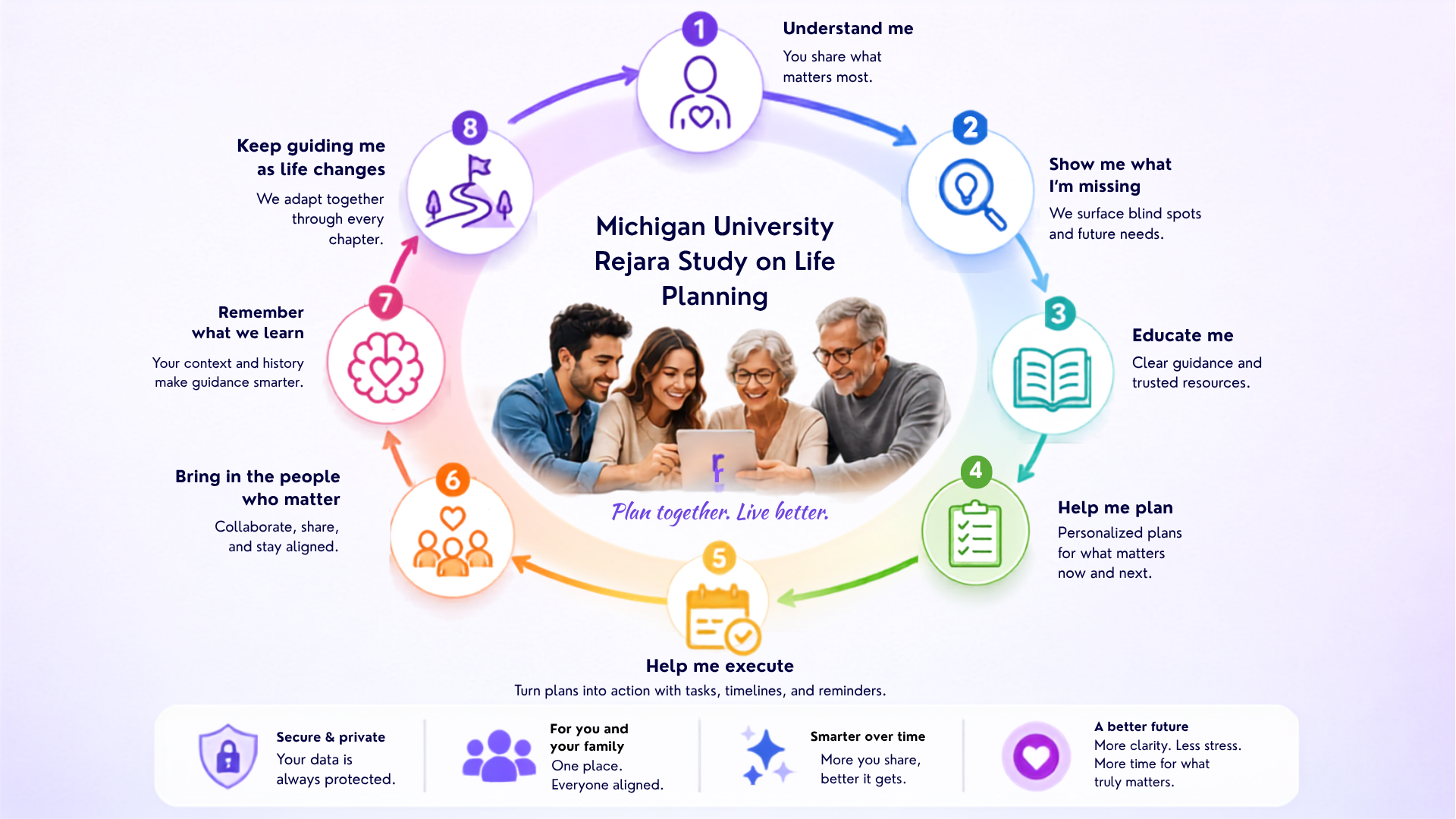
That's the philosophy behind Rejara.
We built Rejara to help families prepare for aging long before difficult decisions become unavoidable. From organizing essential information and coordinating loved ones to exploring different care scenarios and creating shared plans, Rejara helps families stay informed, connected, and prepared throughout the journey.
Because aging isn't defined by one decision or one move into senior living.
It's a series of decisions made over many years.
And the earlier families begin preparing, the more confidence, and more choices, they'll have when the next chapter arrives.