Caregiver Stories: Nobody handed me a plan for what came after
When the hospital system ended and mine began

The hospital had a system: nurses rotated on schedule and medications were tracked on a whiteboard. Someone always knew what had happened on the previous shift.
Then my dad came home, and I became the system.
Dad came home with medication changes, an oxygen schedule, two specialist referrals, and a folder of discharge paperwork I read three times and still never fully absorbed. I remember sitting at his kitchen table that first night, thinking that none of these instructions were going to execute themselves and that I was the only person in the room who understood even half of what they meant. My brother lived nearby, but I had spent eleven days in that hospital and he had not, and the gap between what I knew and what he knew felt impossible to close over text.
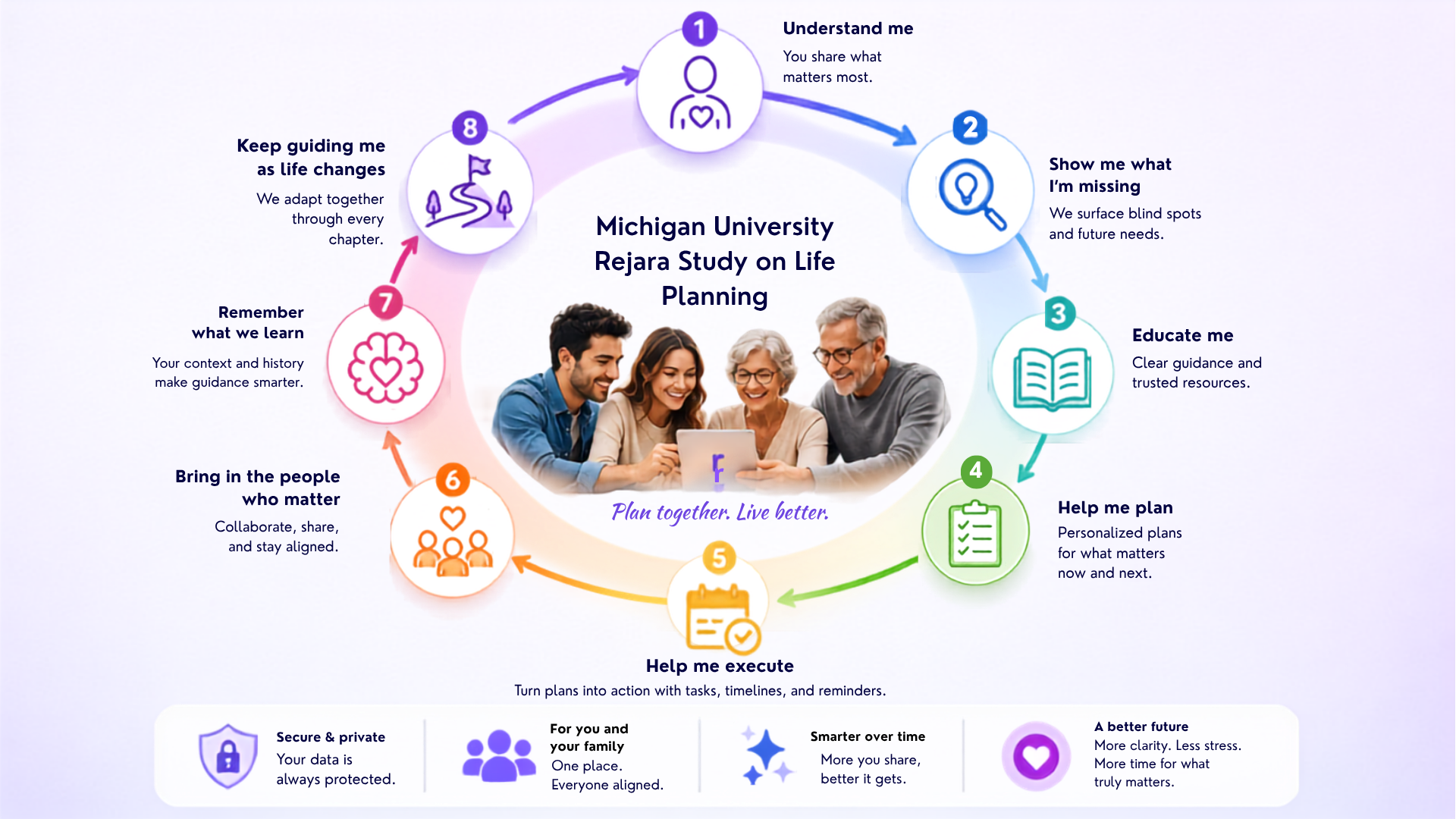
I found Rejara online and I created an account on the caregiving platform. It began by asking about his medications, his providers, and his care plan. It guided me through organizing everything step by step, covering the details I had been trying to hold in my head and reconstruct each time someone asked a question.
As I entered his information, it helped me catch two discrepancies between what the discharge paperwork said and what his regular doctor had on file. I saved everything into the Organizer, and for the first time the information existed in one place instead of scattered across papers, messages, and memory.
When I moved into the Act module, I took every instruction, every follow up, and everything the discharge nurse had said and turned it into a task with a clear owner and a due date. Call pulmonology. Confirm the physical therapy referral. Pick up the new prescription. Each task was visible and assigned. When my brother asked how he could help, I sent him three specific tasks instead of trying to explain eleven days of context.
I now use the Journal to keep a running record of updates and observations. I log changes in symptoms, appointment notes, and details that may matter later. It replaced the long text thread I had been keeping with myself, which I could never search when I needed it.
About two weeks in, Enhance flagged a gap related to legal documentation. I had been so focused on the medical side that I had not considered it. That is exactly the kind of thing that can be missed when one person is holding the full picture and trying to keep everything moving.
The responsibility has not disappeared. There are still moments when I am the only one who fully understands what the last few months have looked like. But Rejara made it possible to bring others in without starting from the beginning each time, and it made it possible to trust that important details were not being overlooked.