The Day We Can No Longer Trust Our Own Eyes
You trust your eyes. You trust familiar voices. AI is making both unreliable. Here's what every family should know before the next scam targets someone they love.
For most of our lives, trust was surprisingly simple.
If you recognized someone's face, you assumed they were who they claimed to be. If a familiar voice called asking for help, you answered. If a respected doctor or television personality recommended a product, you gave it more credibility than an anonymous advertisement.
Those instincts served us well for decades.
Artificial intelligence has quietly changed the rules.
Today, a scammer no longer needs to steal your password or break into your bank account. They can borrow someone else's face, clone their voice, and manufacture trust itself. And while everyone is vulnerable to these new scams, older adults are increasingly finding themselves in the crosshairs.
The technology has advanced so quickly that many experts believe we're only seeing the beginning of a much larger problem.
Recently, Alzheimer's advocate Neal Shah experienced this firsthand. Families began contacting him with an unusual question: Had he really endorsed a supplement that claimed to cure dementia?
He hadn't.
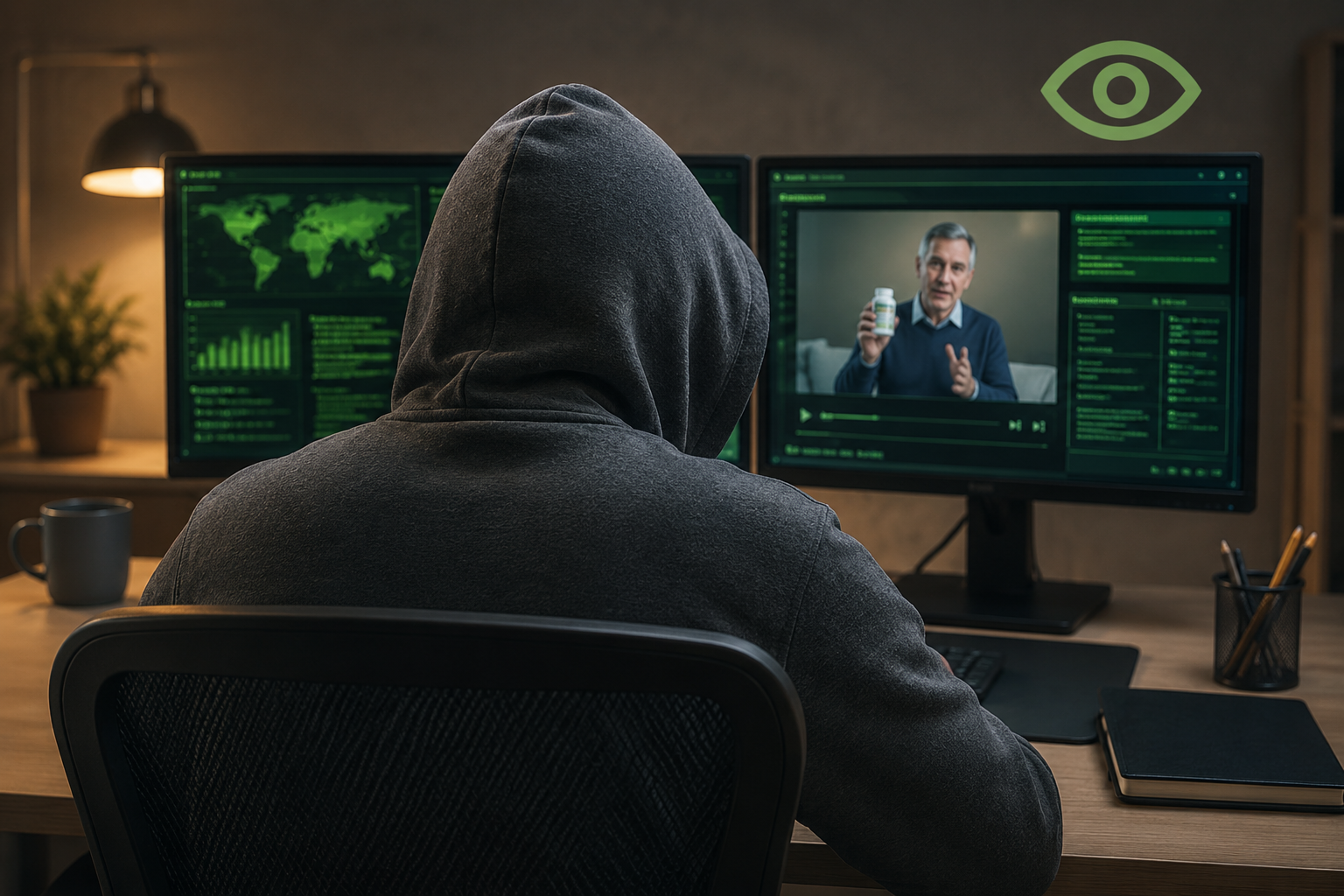
Scammers had used artificial intelligence to create convincing videos that copied both his appearance and his voice, then paid to promote those videos online. According to Shah, some older adults and family caregivers spent money believing the endorsements were genuine. His experience serves as a warning—not because it is unique, but because it is becoming increasingly common.
For years, fraud relied on deception that was often easy to spot. Poor grammar, suspicious email addresses, awkward phone calls, and unbelievable promises gave careful consumers a chance to recognize something wasn't right.
Artificial intelligence is eliminating many of those warning signs.
Today's scammers can create polished videos featuring doctors, financial experts, television personalities, or community leaders who appear to speak naturally and convincingly. Voice-cloning technology can imitate a loved one's speech patterns with remarkable accuracy. A phone call that sounds like your grandson asking for emergency money may no longer be obviously fake. A video recommending a miracle supplement may feature a face you've trusted for years—even though that person never recorded a single word.
The danger isn't simply that these scams look more convincing. It's that they exploit one of our most fundamental human instincts: trust.
Older adults may be particularly vulnerable, not because they are less intelligent or less careful, but because they built their lives in an era when seeing was often believing. They learned to evaluate credibility based on familiar faces, recognizable voices, and established institutions. AI has weakened each of those signals almost overnight.
For families caring for aging parents, this creates a new responsibility.
Caregiving has traditionally focused on medications, medical appointments, transportation, and safety around the home. Increasingly, it must also include digital safety.
Conversations that once centered on preventing falls may soon include recognizing deepfakes. Family meetings about financial planning may also include agreeing on how to verify unexpected phone calls, videos, or online recommendations. Just as families prepare emergency contact lists, they may need verification plans for suspicious requests involving money or personal information.
Simple habits can significantly reduce risk.
Families can agree that no urgent financial request will ever be acted upon without speaking directly to another trusted family member. They can establish a private verification phrase for genuine emergencies. They can encourage older relatives to pause before responding to emotional requests and independently verify any medical or financial claims through official websites or known phone numbers rather than links provided in advertisements.
Perhaps the most important habit is slowing down.
Nearly every successful scam depends on creating urgency. A loved one is supposedly in danger. An investment opportunity expires tonight. A miracle treatment is available for a limited time. Scammers want decisions made before questions are asked.
Taking five minutes to verify a claim may feel inconvenient.
It is also one of the most effective forms of protection.
This shift extends well beyond financial fraud. As AI-generated images, videos, and voices become increasingly realistic, society is entering an era where authenticity can no longer be judged by appearance alone. The old advice was to trust but verify. Today, we may need to reverse that order: verify first, then trust.
Technology companies, regulators, and law enforcement all have important roles to play. But families shouldn't wait for someone else to solve the problem. The most effective defense is often a simple conversation before a crisis occurs.
Ask your parents whether they know that videos can now be generated entirely by artificial intelligence. Explain that even recognizable experts and public figures can be impersonated. Agree on what steps everyone will take before sending money, sharing sensitive information, or purchasing products promoted online.
These discussions may feel unnecessary today.
They won't for long.
We often talk about helping older adults age safely at home. Traditionally, that meant preventing falls, managing medications, and planning for medical emergencies.
In the years ahead, safety will increasingly mean something else as well.
Helping the people we love navigate a digital world where seeing is no longer believing.
Sources
Neal Shah, LinkedIn post describing AI-generated deepfake advertisements using his likeness to promote fake dementia supplements.
FOX 5 DC interview discussing AI deepfake scams targeting older adults and caregivers.