The Most Valuable Thing Parents Can Leave Behind Isn't Money
Money can be transferred with a signature. Wisdom can't. As families prepare for the Great Wealth Transfer, preserving the lessons behind the wealth may prove even more valuable than the assets themselves.

The largest wealth transfer in history is underway. Depending on which study you read, somewhere between $36 trillion and more than $100 trillion will pass from older Americans to their children and grandchildren over the coming decades.
Yet one statistic may be even more revealing.
For years, the wealth management industry has observed that roughly 80% of heirs eventually replace their parents' financial advisor. It's tempting to assume they're chasing lower fees or better investment returns. More often, they're looking for something entirely different.
They didn't inherit their parents' life.
Their parents spent decades planning for retirement. Their children often inherit while they're balancing careers, raising families, and caring for aging parents of their own. The investments may be the same, but the decisions surrounding them have changed.
And those decisions rarely begin with the portfolio.
Instead, families are trying to answer questions no balance sheet can solve. What should happen to the family home? Who takes responsibility for an aging parent? Why was the estate structured this way? What did Mom or Dad actually want?
These aren't investment problems.
They're family problems.
That's why the greatest challenge in the Great Wealth Transfer isn't moving assets. It's preserving the knowledge behind them.
Most parents spend a lifetime building wisdom that never appears in an estate plan. They learn how to navigate financial uncertainty, make difficult caregiving decisions, resolve family disagreements, and balance competing priorities. They understand not only what they chose, but why they chose it.
Unfortunately, that wisdom often disappears when they do.
Imagine if families inherited more than accounts and documents. Imagine inheriting clear guidance: how to approach long-term care, when to sell the family home, how caregiving responsibilities should be shared, or the principles that shaped decades of financial decisions. Those aren't just memories. They're actionable plans that can help the next generation make better decisions when it matters most.
This is why the future of wealth management is about more than investment performance. Families increasingly need transparency so everyone works from the same information, continuity so important knowledge isn't lost through life's transitions, and wisdom so experience can guide future decisions.
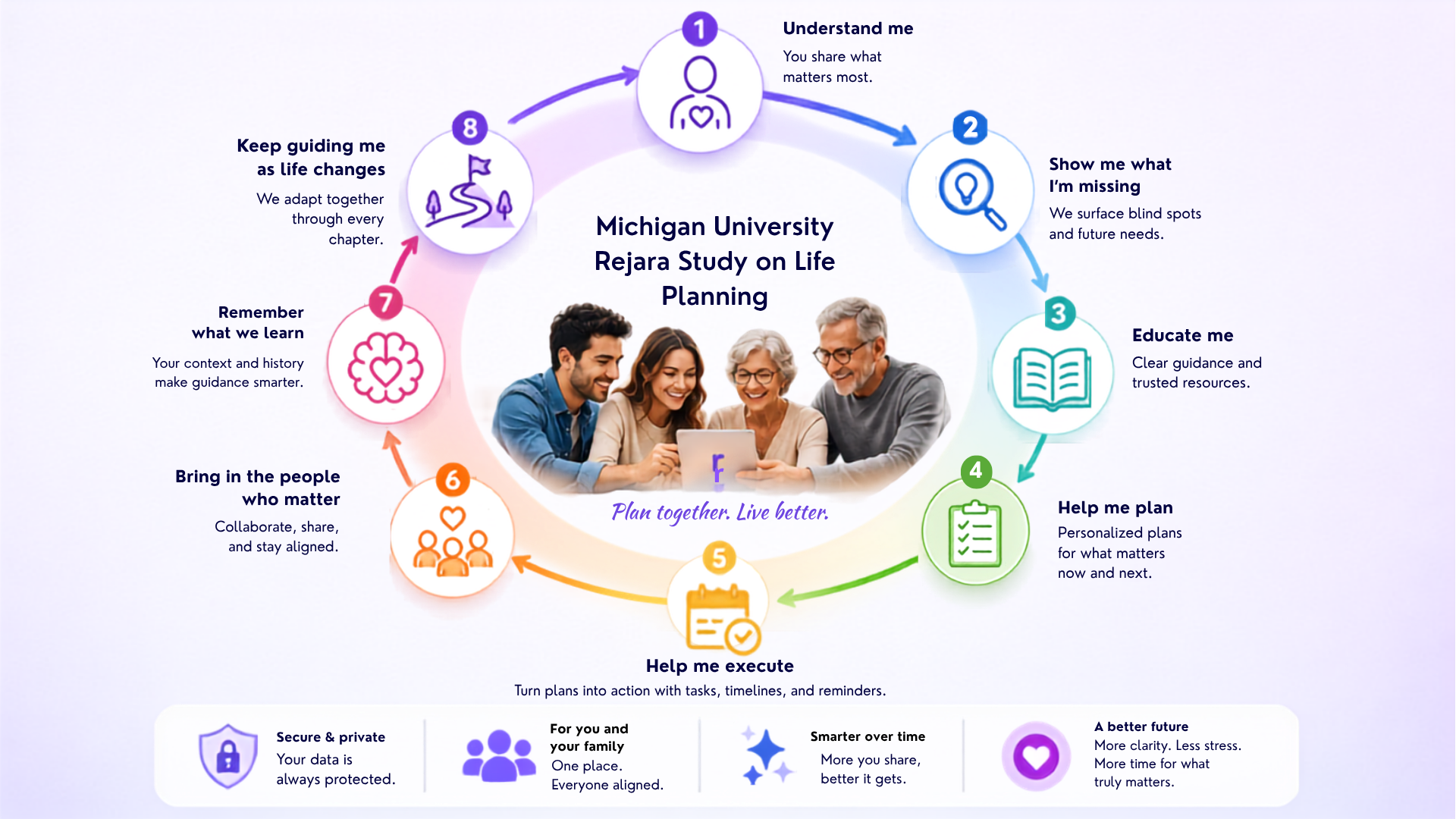
Platforms like Rejara are built around those ideas. They don't replace financial advisors, attorneys, or healthcare professionals. They preserve the family's shared understanding—documents, decisions, responsibilities, and the reasoning behind them—so that knowledge remains available across generations.
The Great Wealth Transfer will ultimately be measured in trillions of dollars.
Its true success, however, will be measured by something far more personal.
Not by how much wealth families inherit. But by how much wisdom they keep.